
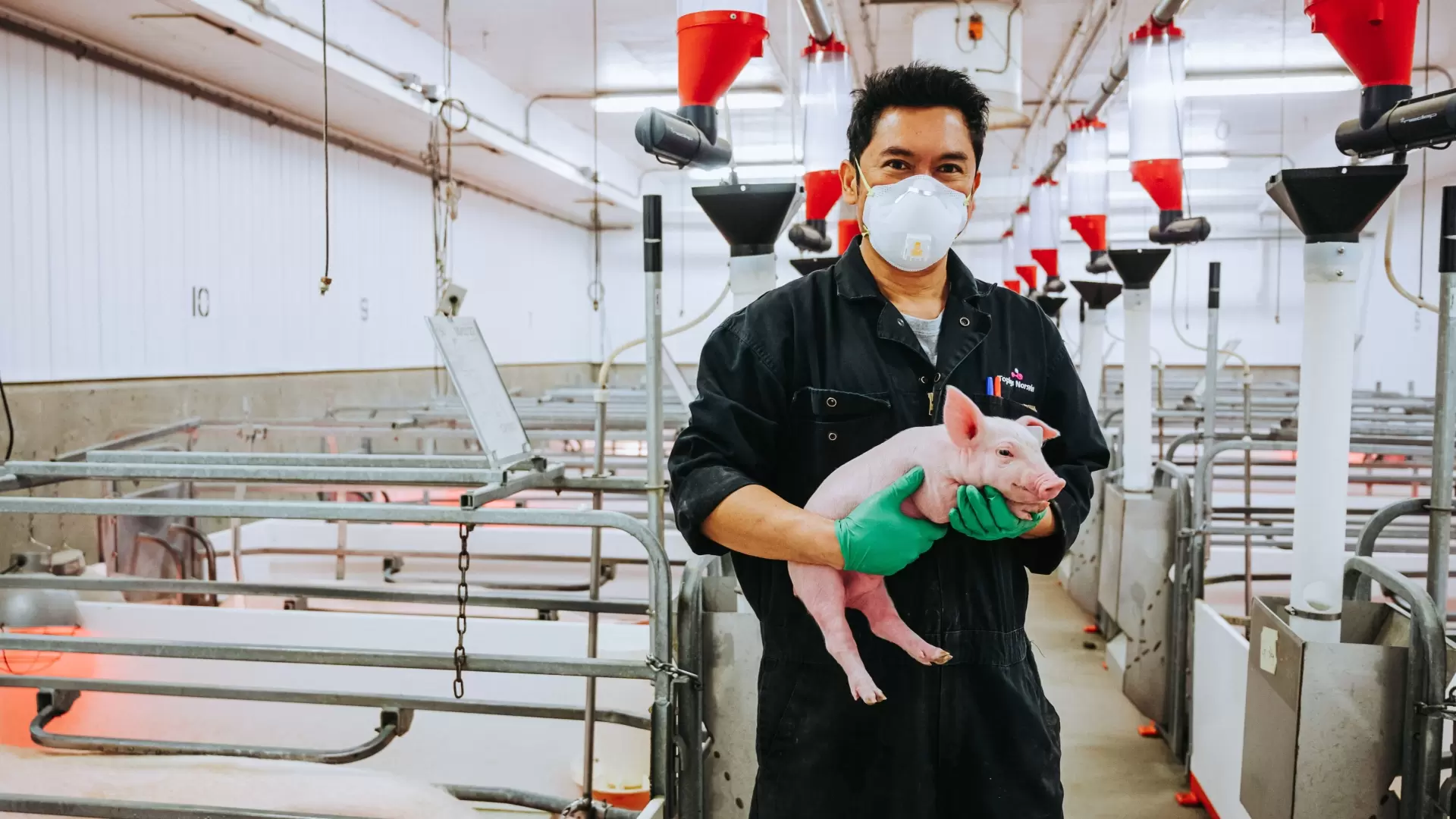
General Principles for Pig House Design
Create a Suitable Ecological Environment
Pigs depend on proper environmental conditions for growth, development, and reproduction. Design must follow pigs’biological characteristics. Housing dimensions—area, height, aisle widths, door/window sizes, and railing heights—should be based on husbandry processes and the space required for pig activity. Consider human ergonomics for ease of management and combine these requirements organically. Local climate and environmental needs strongly influence design: in hot-humid regions focus on insulation, ventilation, and shading; in cold-dry regions strengthen enclosure and insulation for heating efficiency. Sun exposure and prevailing wind are key factors for orientation and spacing. Collect local meteorological data and environmental parameters required for each growth stage before design.
Pig barn environmental control requirements vary by region, so adapt designs to local conditions. Over-specifying an “ideal” environment wastes resources; conversely, overly simple buildings that fail to insulate or protect will impair pig performance and are uneconomic.
Compatible with Industrialized Production Processes
With advances in nutrition, animal science, veterinary care, and mechanization/automation, modern pig production resembles industrial manufacturing. Farm flow typically operates on all-in/all-out cycles with planned, continuous, and rhythmic production stages that favor mechanization and automation. Pig house designs must accommodate industrial production workflows and be adaptable to evolving mechanization and automation needs.
Attend to Environmental Protection
Farm pollution is mainly odor and insects, and secondarily manure/wastewater contamination of water. Design must consider surrounding land use to prevent the farm from polluting neighbors and to shield the farm from external hazards. Manage manure responsibly—use as fertilizer, biogas feedstock, or treat for reuse—to ensure smooth production while protecting the environment.
Achieve Good Economic Performance
Design and construction should use local conditions and materials where practical to save labor, materials, and capital. Respect economic principles: plan and budget carefully, prioritize cost-effectiveness, and aim for durable, low-maintenance designs that reduce long-term operating costs.
Recent Comments