
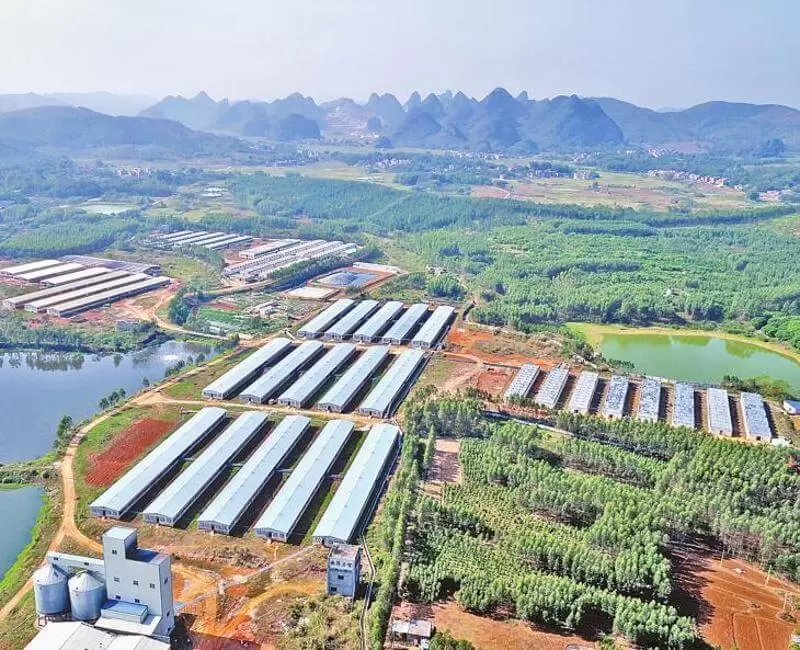
Structure Types of Pig Houses
Pig houses vary by roof form, wall structure and windows, and pig stall arrangement.
By roof form
Gable (slope) roof: Includes single-slope, unequal-slope, and double-slope types. Single-slope has small span, simple structure, good ventilation and drainage, low investment and material use, but poor winter insulation—suitable for small farms. Unequal-slope shares single-slope’s advantages but has better insulation and slightly higher cost. Double-slope suits various spans and is common for wide single- or multi-row houses; it offers good insulation, and adding a suspended ceiling improves thermal performance.
Flat roof: Makes full use of the roof platform; insulation and waterproofing can be integrated without a separate ceiling. The main drawback is more difficult waterproofing.
Arch roof: Lower cost and suitable for large spans. Drawbacks include poorer roof insulation, difficulty installing skylights and other fittings, and higher construction skill requirements.
Monitor (bell) and half-monitor roofs: Less commonly used; may be considered in regions where heat prevention is a priority.
By wall structure and presence of windows
Pig houses are classified as open, semi-open, or closed. Closed houses are further divided into windowed and windowless types.
Open house: Three sides walled, one side open. Offers excellent ventilation and lighting, simple structure and low cost, but is highly exposed to external conditions and hard to insulate in winter.
Semi-open house: Three sides walled, one side with a half-height wall. Slightly better insulation than open houses; hanging straw mats or plastic above the half wall in winter can significantly improve insulation.
Windowed closed house: Four-sided walls with windows on the long walls. Window size, number and layout depend on local climate. In cold regions, larger south windows and smaller north windows aid insulation. In hot regions, ground-level windows on both long walls or roof vents/ridge ventilation help summer ventilation. Windowed closed houses offer good thermal control by opening/closing windows seasonally.
Windowless closed house: Highly isolated from external environment; walls have only emergency windows for power-outage situations, not for normal lighting or ventilation. Indoor ventilation, lighting and temperature are fully controlled by equipment, providing stable conditions beneficial for growth and productivity. However, construction and equipment costs and maintenance are high; energy use for artificial control is also high when outdoor climate is favorable. Windowless houses are typically used for environments with stringent requirements, such as sow farrowing rooms and nursery houses for piglets.
By pig stall arrangement
Single-row: Suitable for breeding stock.
Double-row: Common in closed houses; north-side stalls have poorer lighting and interiors can be damp.
Multi-row: Mainly used for finishing pigs.
Recent Comments