
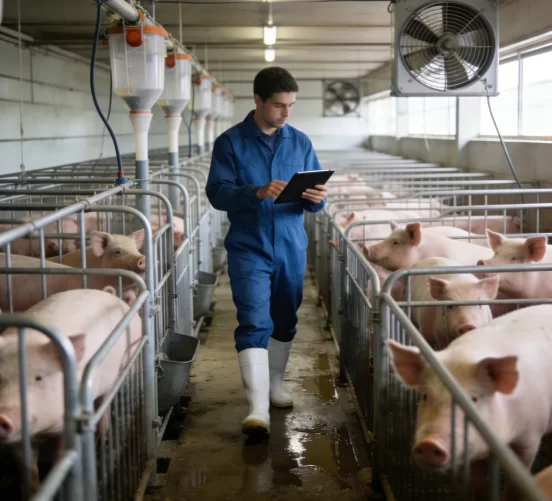
Daily inspection and management process of pig farm
The essence of pig farm management lies not only in completing daily tasks, but also in establishing a systematic “observation and response” mechanism. The core theme is to reject ‘going through the motions’. Daily inspections should not just be a useless process of walking in and out, but an active process of collecting information. Managers need to transform from mere “keepers” to “observers”, using standardized processes to keenly capture small differences in pig herd behavior, environmental changes, and equipment status, in order to intervene before problems escalate. Establish an efficient daily inspection process aimed at transforming uncontrollable biological assets into controllable data and results. Daily patrols are not simply a “glance”, but a purposeful “investigation”. An excellent patrol process should follow the principle of “from outside to inside, from clean to dirty, from observation to action”.
1:The ‘Walk Through’
Core concept: First look at the pigs, then look at the pig farm equipment. The behavior of pigs is the most direct feedback on environmental comfort. Overall status: After entering the unit, first observe the overall distribution of the pig herd. Are pigs clustered (too cold), scattered due to overheating (too hot), or evenly distributed (comfortable)?
Health screening: searching for abnormal individuals. Pay attention to whether there are pigs that are mentally lethargic, isolated, breathing in the abdomen, or limping.
Behavioral signal: Listen for coughing or abnormal screaming sounds. Tail biting or aggressive behavior is often an early signal of environmental stress, such as crowding or poor ventilation.
2: Water&Feed Management
Core concept: Water is the ‘forgotten nutrient’, while feed is the biggest cost.
Drinking water inspection: Flow rate test: Randomly check the flow rate of the water dispenser every day. Nurturing pigs require 1-2 cups per minute (approximately 250-500ml), while fattening pigs require 2-4 cups per minute (approximately 500-1000ml). Low flow rate leads to insufficient intake, while high flow rate leads to waste and discharge pressure. Height adjustment: The height of the water dispenser should be level with the pig’s shoulder and adjusted in a timely manner as the pig grows.
Feed management: Tank coverage: Check the feed coverage at the bottom of the tank. The ideal state is to cover 40% -50% of the material tray. Too much can lead to aging, spoilage, and waste, while too little can affect feed intake. Mold prevention: Clean the dead corners of the feeding trough to prevent clumping and mold growth of the feed, and prevent toxin poisoning.
3: Ventilation
Core concept: To provide pigs with a constant and fresh microenvironment, rather than just focusing on thermometer readings.
Ventilation system:
Air inlet: Check if the opening size of the air inlet is consistent and if the airflow is directly blowing towards the pig’s body (thief wind).
Fan operation: Confirm whether the fan louvers have accumulated dust and whether the belt is loose. Dust accumulating louvers can reduce ventilation efficiency by 30%.
Temperature and Air Quality:
Compare the set temperature of the controller with the actual temperature.
Sensory test: If you feel eye pain or difficulty breathing (high ammonia concentration) in the pigsty, the pigs will feel even worse.
Seasonal adjustment: Focus on the cooling effect of water curtains in summer, and pay attention to the minimum ventilation volume to eliminate moisture in winter.
4: Data&Records
Core concept: Without measurement, it cannot be managed. Data is the key to discovering hidden problems.
Drinking water monitoring: This is the most sensitive health indicator. Studies have shown that a decrease in water intake typically occurs 24-48 hours earlier than clinical symptoms such as fever and reduced appetite.
Key indicators:
Daily dead Taobao numbers and reasons.
Estimated daily food intake.
Medication records (treatment subject, medication, dosage).
Record the highest/lowest temperature.
Trend analysis: Comparing today’s data with the average of the past 3-5 days, any sudden changes should be alerted.
5: Biosecurity&Maintenance
Core concept: Keep pathogens at the door and ensure that facilities are always on standby.
Bio-Safety:
Check if the perimeter fence is damaged to prevent wild animals from entering.
Confirm whether the procedures for the bathroom and changing room are strictly followed.
Are the channels and tools used to handle dead pigs disinfected.
Facility maintenance:
Timely repair leaking pipes, loose fence pins, or damaged floors.
Check if the backup generator and alarm system are in “automatic/standby” mode.
Operational suggestion: Daily Checklist
Suggest printing and posting this list at the entrance of the pigsty to enforce:
Before entering the house
Check the biosafety isolation zone (bathing, changing clothes).
Check last night’s data records (drinking water, temperature alarms).
Internal inspection (recommended twice a day)
Listen: Stand still for 30 seconds when entering the door and listen for any coughing or abnormal sounds.
Watch: Observe the lying posture of the pig herd (clustered/scattered).
Check: Check column by column, mark and treat sick and weak pigs.
Water: Press the water dispenser to check the flow rate and whether there is any leakage.
Material: Check the feeding amount of the material tank and clean the moldy feed.
Gas: Check the operation of the fan, the opening of the air inlet, and the smell of ammonia gas.
Before leaving the house
Record: Fill in the production daily report (including dead Taobao, medication, temperature and humidity).
Repair: Record and report equipment failures that require repair.
Clear: Clean up the clutter in the aisle and keep it clean.
近期评论